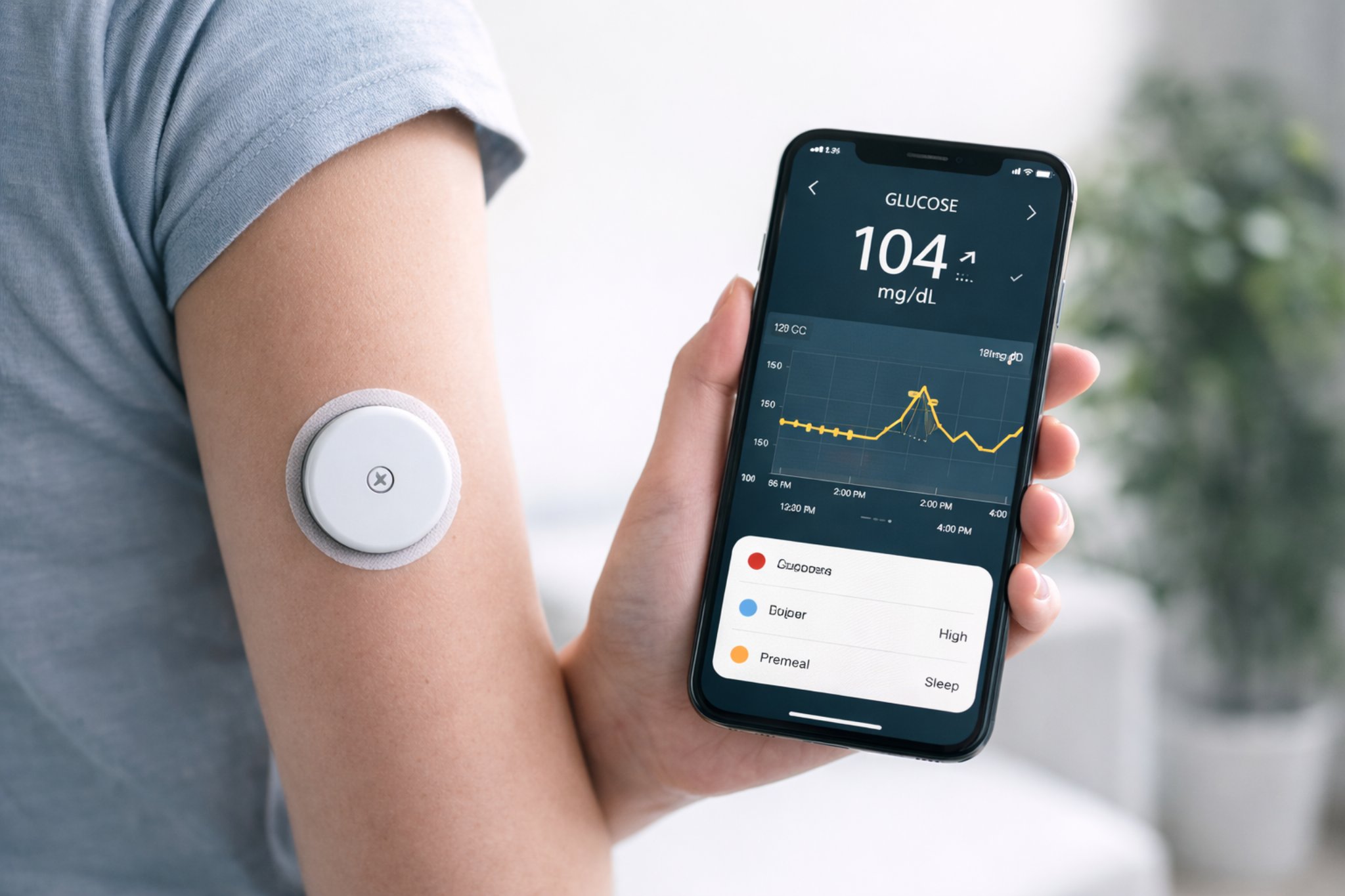
The best continuous glucose monitors can help you understand how food, exercise, sleep, and stress affect your metabolic health in real time. By tracking glucose patterns throughout the day, these devices provide insight into how your body responds to different foods, workouts, and daily habits.
Continuous glucose monitors used to be mostly a diabetes tool. That is changing quickly. In 2026, there are now both prescription CGMs and over-the-counter glucose biosensors that make it much easier to track how meals, exercise, stress, and sleep affect your glucose patterns.
For Qualified Living readers, the best CGM is not necessarily the most medical-grade or the most feature-heavy. It is the one that fits your goal, your access, and how much friction you are willing to tolerate. Some people want the easiest over-the-counter option for nutrition experiments, while others want stronger alerts, deeper data insights, or longer sensor wear time.
In this guide we compare the best continuous glucose monitors available today, including Dexcom Stelo, Abbott Lingo, Dexcom G7, and FreeStyle Libre 3 Plus, to help you choose the right option for your metabolic health goals.
The best continuous glucose monitor for most people in 2026 is Dexcom Stelo because it provides prescription-free access, reliable glucose tracking, and up to 15 days of wear. Other strong options include Abbott Lingo for wellness-focused users, Dexcom G7 for prescription CGM features and alerts, and FreeStyle Libre 3 Plus for a discreet sensor with longer wear time.
Below are our top picks and how they compare.
While glucose tracking gives you real-time data, foundational factors like sleep quality, stress, and mineral balance still play a major role in metabolic health.
Magnesium is one of the most important minerals for sleep and recovery, which you can explore in our guide to the best magnesium supplements for sleep and recovery.
Disclosure: This article may contain affiliate links. If you purchase through them, we may earn a small commission at no additional cost to you. We only recommend products we believe provide value for metabolic health tracking.
🏆 EDITOR’S PICK
Dexcom Stelo
Dexcom Stelo is our Editor’s Pick because it offers the strongest overall fit for most Qualified Living readers: no prescription, straightforward setup, continuous glucose tracking, and enough depth to help you learn from food, movement, sleep, and daily habits without stepping all the way into a more medical workflow.
Key Takeaways
- Best overall for most readers: Dexcom Stelo
- Best for a simpler habit-building app: Abbott Lingo
- Best prescription CGM overall: Dexcom G7
- Best for discreet 15-day prescription use: FreeStyle Libre 3 Plus
- Best for clinician-linked or shared data workflows: Dexcom G7
Quick Comparison: Best Continuous Glucose Monitors
The table below compares the best continuous glucose monitors based on usability, key features, and overall value for metabolic health tracking.
| Product | Best for | Key Strength | Price Tier | Rating | View |
| ⭐ Dexcom Stelo | Best overall OTC | Easy metabolic tracking | $$ | ⭐⭐⭐⭐⭐ | View on Amazon |
| Abbott Lingo | Habit Tracking | Wellness-first insights | $$ | ⭐⭐⭐⭐½ | View on Amazon |
| Dexcom G7 | Best prescription CGM | Strong alerts + ecosystem | $$$ | ⭐⭐⭐⭐½ | View |
| Libre 3 Plus | Most Discreet | Smallest sensor | $$ | ⭐⭐⭐⭐ | View |
Note: Abbott Libre Rio is FDA-cleared for adults with type 2 diabetes who do not use insulin, but it is not included as a ranked pick here because public purchase availability is still less clear than the options above.
How We Chose the Best Continuous Glucose Monitors
We prioritized factors that matter most for Qualified Living readers:
- access without unnecessary friction
- usefulness for metabolic health, nutrition, and habit change
- app experience and ease of interpreting data
- wear time and day-to-day convenience
- alerting and sharing features where clinically relevant
- relevance for low-carb, fasting, and broader metabolic health tracking
We also weighed whether each device is built for a general wellness user or for someone who needs a more medical-grade diabetes workflow. That distinction matters. Lingo and Stelo are easier entry points for many readers, while Dexcom G7 and FreeStyle Libre 3 Plus are stronger if you need prescription-based diabetes management, alerts, or more traditional clinical support.
How We Evaluated Them
Access and setup
Over-the-counter access is a major advantage for newer users. Dexcom Stelo and Abbott Lingo are both sold without a prescription for adults 18+ not on insulin. Prescription options still make sense for many people, but they add more friction at the starting line.
Data delivery and app experience
Lingo and the Libre family emphasize minute-by-minute readings. Dexcom G7 delivers readings every 5 minutes, but its app and sharing system are more mature for many diabetes-management use cases. Stelo sits in between: easier than a prescription CGM, but still useful for food and habit experiments.
Wear time and convenience
Longer wear time reduces friction. Lingo is up to 14 days. FreeStyle Libre 3 Plus is 15 days. Stelo is up to 15 days with a 12-hour grace period. Dexcom G7 is 10 days with a 12-hour grace period.
Alerts and clinical utility
If you need stronger alerts, sharing, and a more clinical workflow, the prescription category still has the edge. Dexcom G7 supports sharing with up to 10 followers, while Abbott’s prescription CGMs offer real-time alarms and stronger diabetes-oriented positioning than its wellness product, Lingo.
Best Overall: Dexcom Stelo
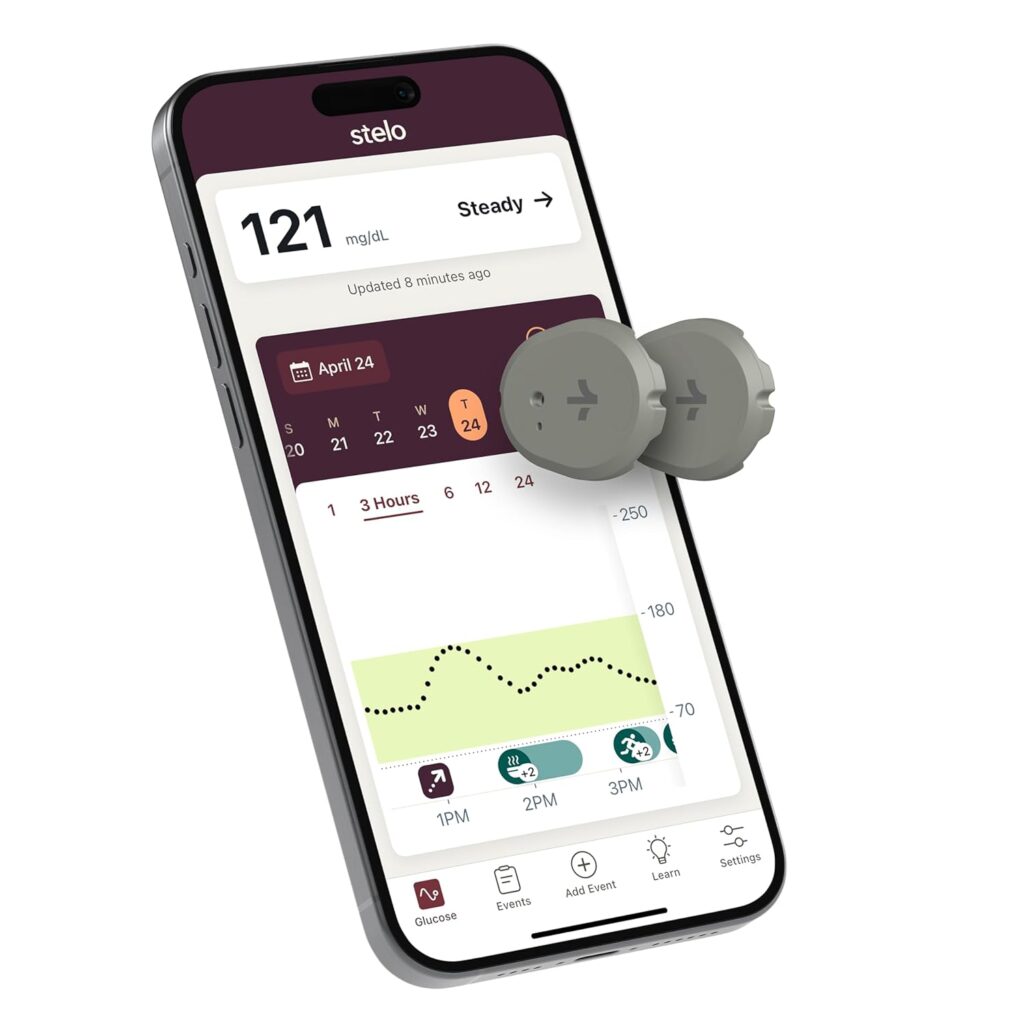
Best for: Adults who want the easiest high-quality entry point into continuous glucose tracking for metabolic health, food response, and behavior change.
Dexcom Stelo is the best overall choice for most Qualified Living readers. It is the first FDA-cleared over-the-counter CGM in the U.S., intended for adults 18+ who do not use insulin, including people with type 2 diabetes managed without insulin and people without diabetes who want to understand how diet and exercise affect glucose. Dexcom sells one-time and subscription options, and each biosensor is designed for up to 15 days of wear with a 12-hour grace period.
Why We Like It
- No prescription required
- Strong overall balance of access, quality, and usability
- Up to 15 days of wear per biosensor, plus a 12-hour grace period
- Can connect with Apple Health or Google Health Connect for broader context
- Good fit for food experiments, exercise patterns, and metabolic awareness
Potential Downside
Stelo is not for people on insulin, on dialysis, or with problematic hypoglycemia. It also sends data to health apps with a delay, so it is better for trend learning than for people who need tighter real-time clinical oversight.
Best for Habit Building: Abbott Lingo
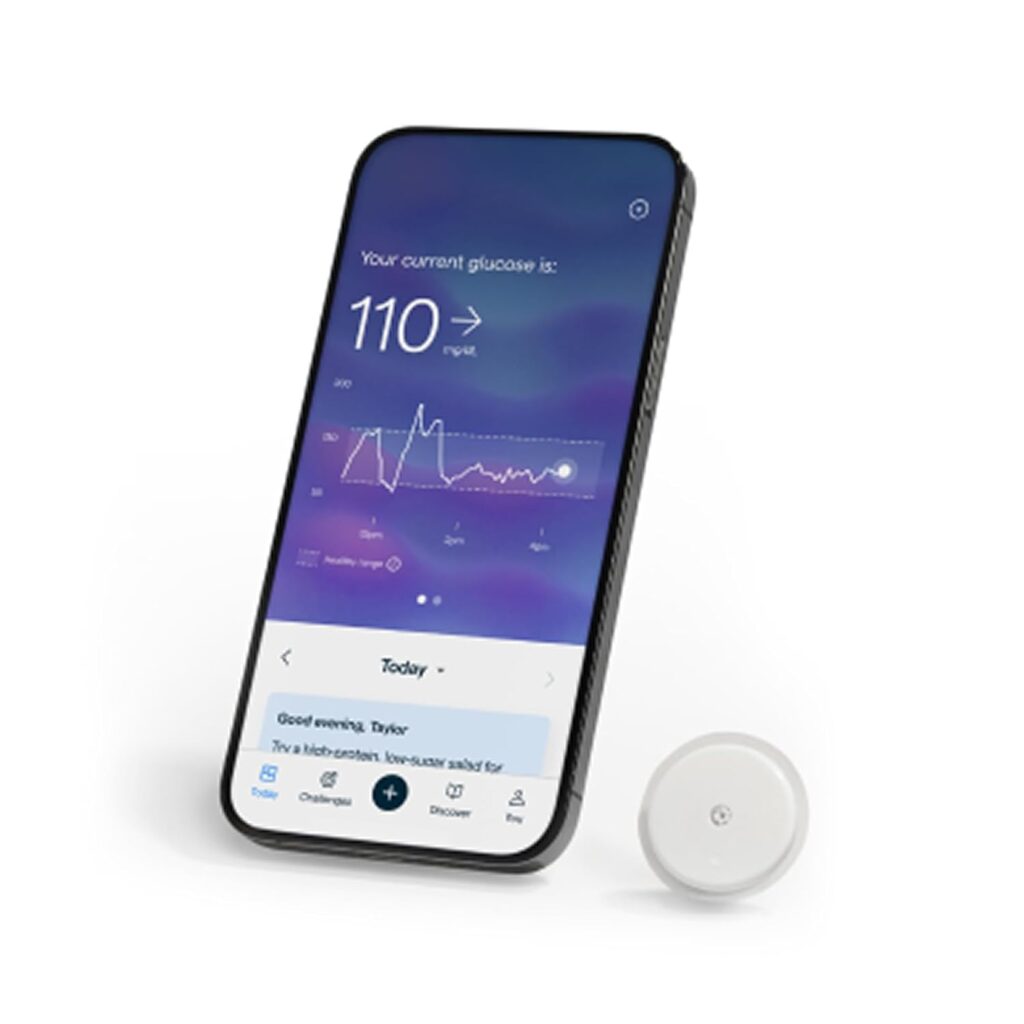
Best for: Readers who want a wellness-first CGM experience with a cleaner, more behavior-oriented onboarding style.
Abbott Lingo is the strongest alternative if your goal is not diabetes management but habit change. Abbott positions Lingo for adults 18+ not on insulin who want to improve overall health and wellness. The product includes minute-by-minute glucose monitoring, app-based insights, and flexible one-time purchase options starting with a 2-week plan or 4-week plan.
Why We Like It
- No prescription required
- Minute-by-minute glucose tracking
- Clean, consumer-friendly onboarding
- 2-week and 4-week no-commitment options
- Strong fit for nutrition awareness and daily routine experiments
Potential Downside
Lingo is explicitly positioned as a wellness product, not a disease-diagnosis or disease-management tool. If you need stronger alerts, broader diabetes support, or clinician-facing features, a prescription CGM will usually make more sense.
Best Prescription CGM Overall: Dexcom G7
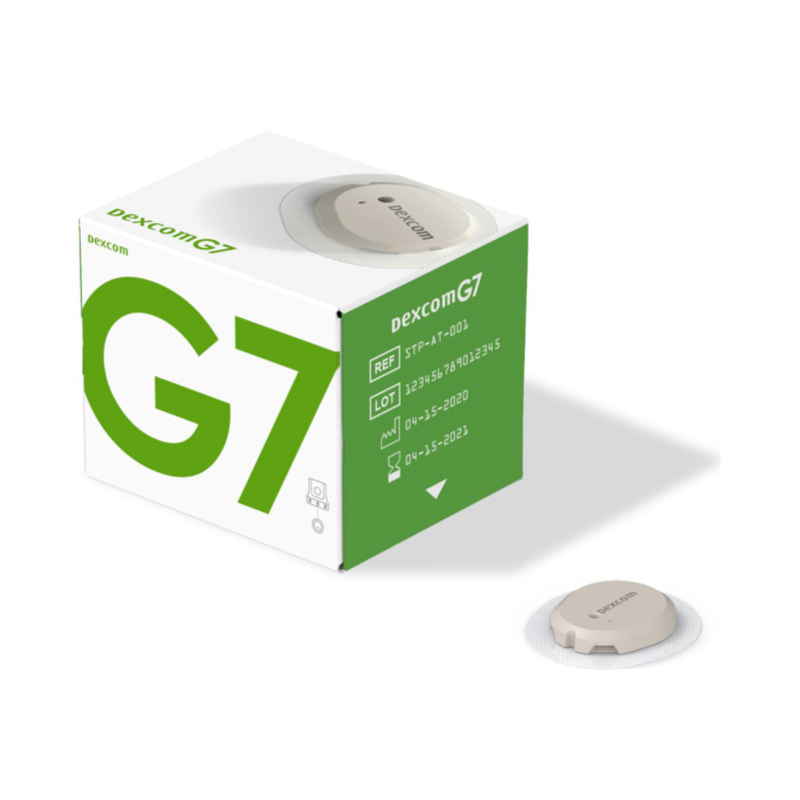
Best for: People who want a prescription CGM with strong app features, alerts, and data-sharing support.
Dexcom G7 is the best prescription CGM overall in this roundup. It is better suited than Stelo if you need a more traditional CGM workflow for diabetes management, family sharing, or stronger alerts. The G7 app supports sharing with up to 10 followers, delivers readings every 5 minutes, and includes a 10-day wear period plus a 12-hour grace period.
Why We Like It
- Strong prescription-CGM ecosystem
- Share/Follow support for up to 10 followers
- 12-hour grace period helps reduce data gaps
- Better fit for users who need alerts and a more medical workflow
- Good choice if you may later want tighter clinician involvement
Potential Downside
It requires a prescription, has a shorter base wear time than some Abbott options, and typically adds more friction than Stelo or Lingo if your only goal is metabolic experimentation.
Best for Discreet 15-Day Wear: FreeStyle Libre 3 Plus
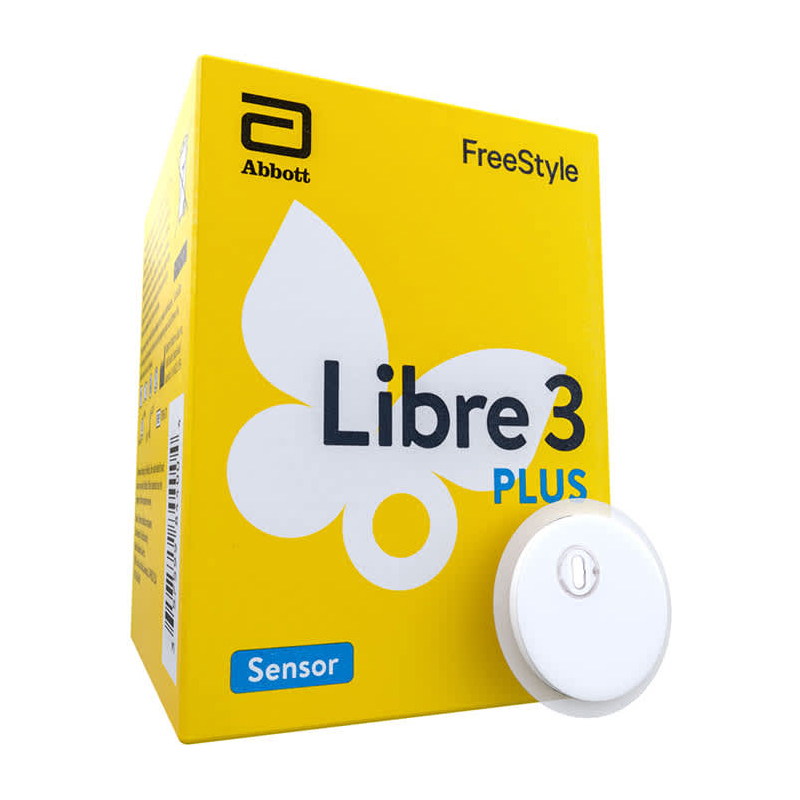
Best for: People who want a prescription CGM with long wear, minute-by-minute readings, and a smaller, more discreet sensor.
FreeStyle Libre 3 Plus stands out for convenience and wearability. Abbott’s comparison materials say it offers 15 days of wear, readings every minute, no overpatch requirement, and a smaller sensor than Dexcom G7. For users who prioritize discreet wear and fewer sensor changes, it is a compelling prescription option.
Why We Like It
- 15-day wear time
- Minute-by-minute readings
- Smaller, thinner sensor profile
- No overpatch required in Abbott’s comparison
- Real-time alarms available
Potential Downside
It still requires a prescription in the U.S., and if you prefer Dexcom’s sharing ecosystem or broader consumer ecosystem, G7 may still feel more flexible.
What to Look For in a Continuous Glucose Monitor
Prescription vs. over-the-counter access
This is the first filter. If you want the easiest path, start with Stelo or Lingo. If you need diabetes-focused alerts or a more clinical feature set, prescription options are more appropriate.
Wear time
Longer wear usually means less hassle. In this roundup, wear times range from 10 days to 15 days, with some grace-period functionality that reduces gaps.
App quality and insight style
Some apps feel more clinical. Others are better for everyday habit learning. For Qualified Living readers, this matters as much as raw sensor specs.
Alerts and sharing
If you need to share data with family or use stronger real-time alerts, Dexcom G7 has a clearer edge.
Goal alignment
Ask whether you are using a CGM for curiosity, weight and nutrition experiments, low-carb tracking, type 2 diabetes lifestyle management, or formal diabetes care. The best choice changes depending on that answer. For some people, pairing a CGM with smart scales can create a more complete picture of metabolic health progress.
How to Choose the Right Option for Your Goal
Choose Dexcom Stelo if…
You want the best overall combination of access, quality, and usefulness for metabolic health without needing a prescription.
Choose Abbott Lingo if…
You want a simpler, wellness-oriented user experience and mostly care about learning how meals, activity, and routines affect glucose.
Choose Dexcom G7 if…
You want a prescription CGM with stronger alerts, better data sharing, and a more clinical diabetes-management workflow.
Choose FreeStyle Libre 3 Plus if…
You want a discreet prescription sensor with 15-day wear and minute-by-minute readings.
FAQ
What is the best continuous glucose monitor for metabolic health?
For most Qualified Living readers, Dexcom Stelo is the best overall place to start because it offers over-the-counter access, up to 15 days of wear, and a strong balance between ease of use and meaningful glucose insight.
What is the best CGM without a prescription?
Dexcom Stelo and Abbott Lingo are the two clearest over-the-counter choices. Stelo is the stronger overall pick for most readers, while Lingo is a strong option if you prefer a more wellness-oriented experience.
Is a CGM worth it if I do not have diabetes?
It can be useful for short-term learning around meals, exercise, sleep, and routine patterns, but it is most valuable when you are using the data to run simple experiments and change behavior rather than just watching numbers all day.
Which CGM is best for type 2 diabetes not on insulin?
Dexcom Stelo is a strong option for adults who do not use insulin, and prescription options like Dexcom G7 and FreeStyle Libre 3 Plus may also make sense depending on your clinician’s recommendation and your goals.
Which CGM has the longest wear time?
In this roundup, Dexcom Stelo and FreeStyle Libre 3 Plus offer up to 15 days of wear, while Abbott Lingo offers up to 14 days and Dexcom G7 offers 10 days plus a 12-hour grace period.
Which CGM is best for low-carb or keto?
For low-carb, keto, and fasting experiments, Dexcom Stelo is the most practical starting point because it is easy to access and gives enough signal to compare meals, walks, training sessions, poor sleep, stress, and overall low-carb hydration habits. Abbott Lingo is also a good fit if you prefer a wellness-first experience.
Our Recommendation
Dexcom Stelo
If you want the best continuous glucose monitor for metabolic health, Dexcom Stelo is our top recommendation. It gives most readers the easiest path into high-quality glucose tracking without requiring a prescription, while still offering enough depth to make the data useful. It is the best match for people who want to understand how food, exercise, sleep, and stress affect their glucose in everyday life.
Final Verdict
For most readers, Dexcom Stelo is the best continuous glucose monitor in 2026 because it strikes the best balance between accessibility, usability, and real-world metabolic insight.
If you want a more habit-focused, wellness-oriented experience, Abbott Lingo is the strongest alternative.
If you want a prescription CGM with stronger alerting, broader clinical use, or better data-sharing support, Dexcom G7 is the better fit. If discreet wear and 15-day prescription use matter most, FreeStyle Libre 3 Plus deserves a close look.